Driving Like a Maniac is on indefinite leave, but in the meantime why not check out the offerings from the other ladies of the Italy Roundtable?
The Italy Roundtable is a group of likeminded women writing about different facets of Italy. The theme this month is SWEET, and we love to receive your comments and feedback; do let us know what you thought of each post, either in the comments section below each one, or via Facebook and Twitter, using the hashtag #ItalyRoundtable
I spy, with my little eye, something beginning with C …
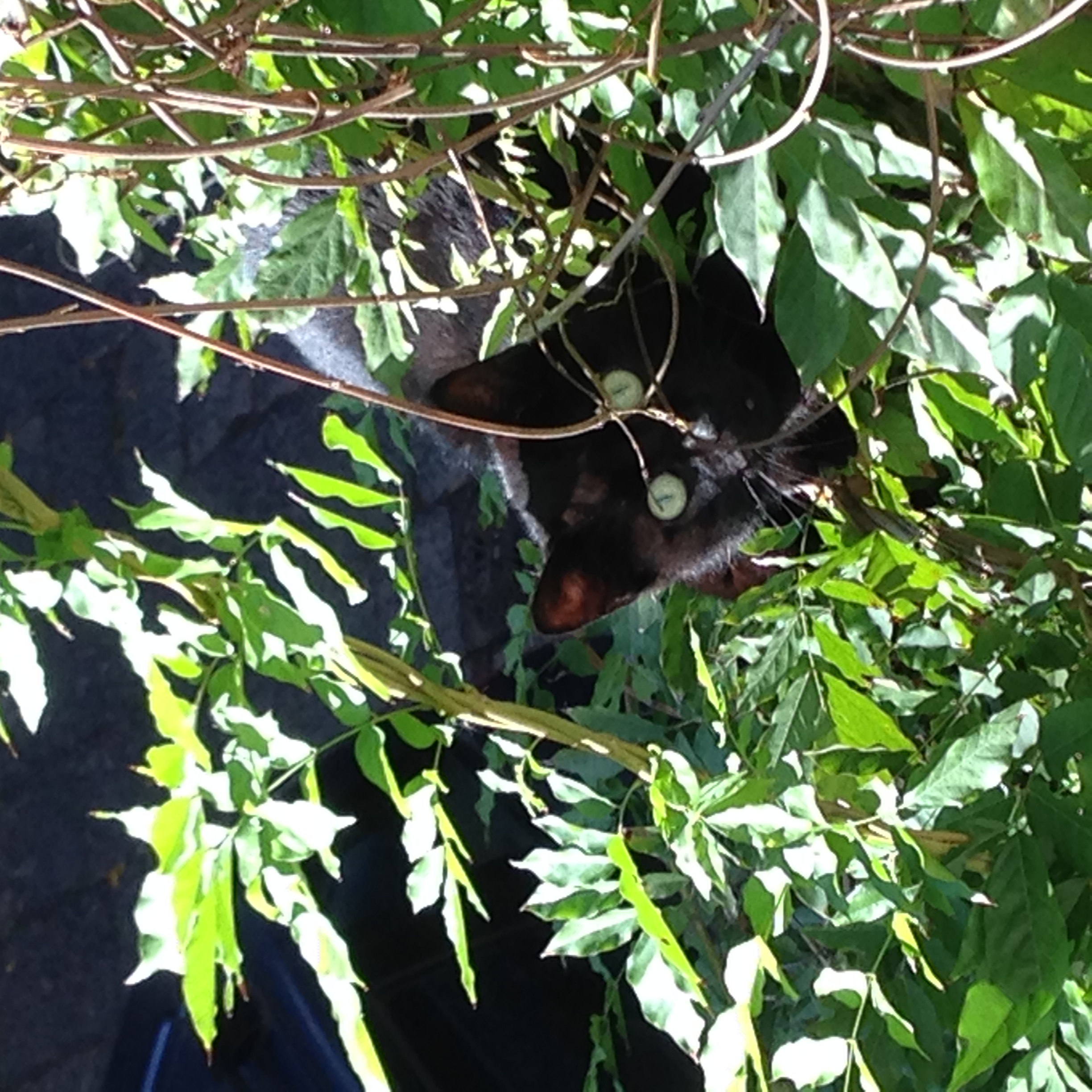
December sun warming bare skin. Pigeons roosting in holes in the wall, nibbling their feathers and bobbing their heads. The gentle, constant whirr of an extractor fan. A line of gossamer flying past, seeming to float on sunlight. Tiny flies and dust motes, glinting white and gold. A black cat creeping through the wisteria, six foot from the ground and out of reach of the overly-friendly AmStaff galumphing below. The putt-putt-putt of an ancient moped, slowing to a halt and idling outside the window. A rasping, cigarette-tinged yell from inside: “Ahò!” The moped turns and goes away again. A whirling cloud of gnats tornadoes through and disappears as quickly as they arrived. Sheets and towels waft gently, every so often pushing a scent of detergent and sunlight (fresh air? ozone?) into the room. A clattering of plates and a humming of voices. Knife slamming on chopping board. Hammer tapping on wall. Car horns tooting distantly.
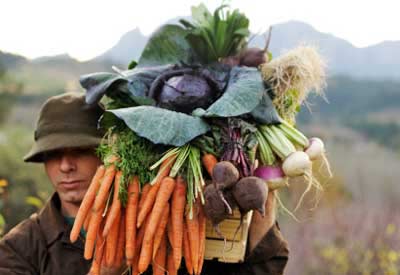
Harvest, to me as a child in a farming community, meant wheat stubble burning and the throat-clutching excitement (terror?) of seeing the fire and smoke licking across the fields. Even though it was controlled, there was still – in my child’s mind at least – always the possibility that it could race away from us all, burning everything in its wake.
When it was done, and our noses and our hair and our eyes were full of smoke and the fire hadn’t destroyed everything and my world was (disappointingly?) safe again, there was the glorious consolation prize of combing the field for any charred ears that had been left behind. I used to love brushing off the papery outer husks, then cracking the blackened grains open with my teeth and savouring their smokey, bonfired taste.
Harvest also meant bringing tins of baked beans, ears of wheat and home-grown veg to school, from where we would carry them to the local church and leave them as Harvest Festival offerings. I don’t know who the bounty went to – nowadays, I suppose it would be a food bank – because my concentration was mainly on the excitement of getting to stand on the altar steps in the church, along with the singing of seasonal hymns. ‘We Plough the Fields and Scatter’ is still one of my favourites.
Burning fields, and ploughing and scattering, has little bearing on my experience of Sicilian harvest, however. Given that I live in the centre of a city, even if only an hour from the slopes of Mount Etna, I don’t see much of the autumn harvest apart from its produce these days.
Happily, due to other, more countrified, folks’ work, autumn is a particularly rich time for sagre (food festivals) celebrating each region or town’s food speciality. This might be pistacchi, castagne, funghi – or even new wine. So for this month’s Italy Roundtable post on the theme of Harvest, I’m going to go back a few years, to when I lived in Calabria and we went to the Bova wine sagra.
I hope you enjoy it as much as we did.
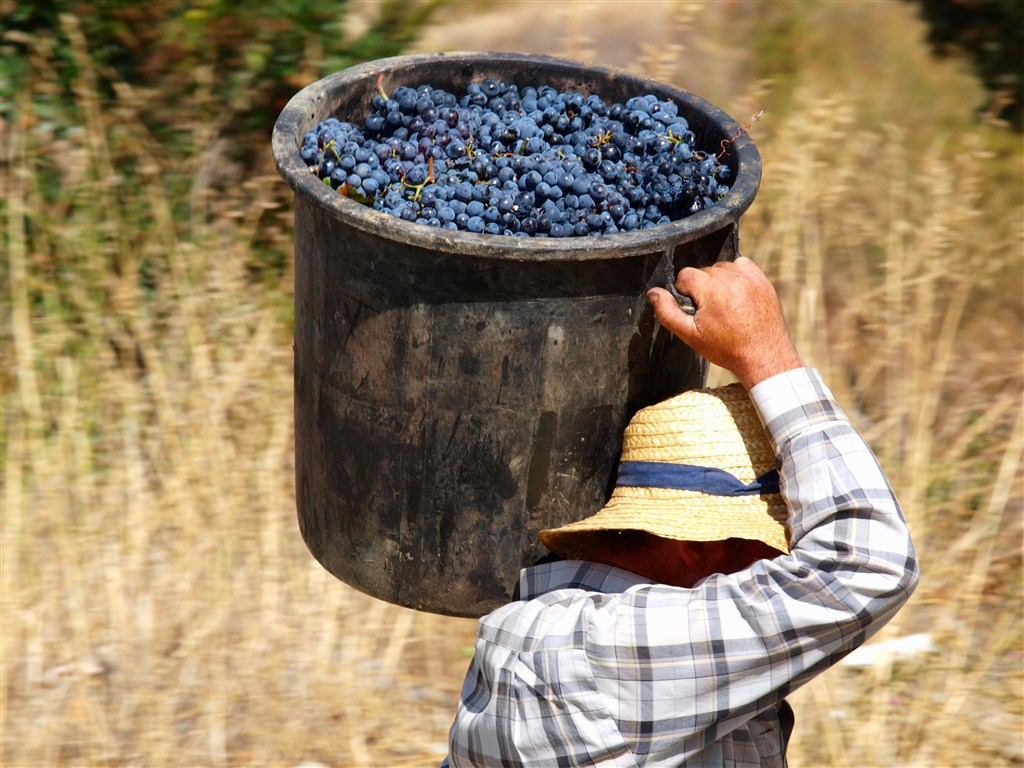
He’ll deserve a glass or two of wine after all that heavy lifting
It’s Saturday night and there’s a wine festival going on. We teachers don’t need asking twice. Roping in Liv and Meg’s (perpetually far more sober) Italian boyfriends to drive us there, Olivia, Megan, Alice and I pile into cars and turn up the music for the 90-minute drive. We’re heading for Bova, a town in the southern Calabrian mountains, so we’re wrapped up warm, as it’s likely to be cold that high up. We’ll realise the error of our ways when we start dancing the tarantella later, but for now we’re congratulating ourselves on our foresight.
Disaster strikes before we’ve even left Palmi. Alice and I are in Alby and Meg’s car. I’m aware of some rapid, worried-sounding conversation going on in the front, but I’m not paying much attention. Alby pulls into the petrol station, where Marco and Liv are already filling up, and shouts out of the window to Marco. He then turns to Alice and me in the back, with an apologetic shrug. You need to go with Marco. I must go home and change the car. There’s a problem with the engine. Well, that doesn’t sound too good. Alice and I gather up our coats and scarves and scamper across the forecourt. We’re greeted by a chair-dancing Liv, who is grinning like a loon. She turns up the music as we climb in, causing Marco to duck his head and floor the accelerator – god forbid he should be heard listening to Lou Monte. Olivia! You embarrass me! He’s smiling as he says it, but it’s noticeable that he doesn’t slow the pace until we get onto the motorway and are clear of anyone who might hear the mortifying music blaring from his car.
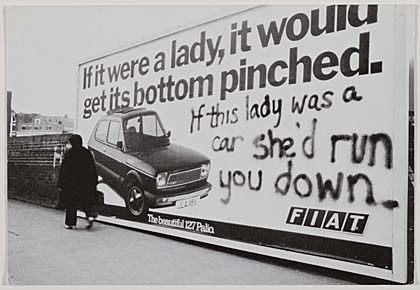
I love me some mixed message conditionals
Because of the car problems, Alby and Meg will be about 20 minutes behind us. This worries Marco who, as an Italian, is programmed to only ever travel in convoy. He throttles back. Alby, in contrast, will no doubt be flooring it behind us. By the time we reach Bova we should be back together again, and all will be right with the world. True enough, as we reach the base of the mountain Marco’s phone rings. It’s Alby, finding out where we are. It turns out he’s caught up the deficit and is only about two minutes behind us. We therefore stop for coffee and reunification in Bova Marina. The man behind the bar isn’t too impressed with us girls asking for directions, but unbends a little when he realises that we have, not just Italians, but Italian MEN with us. We females, cursorily dismissed, stuff our faces with cake and leave the boys to do the direction thing. Women’s Lib hasn’t yet reached Calabria and now is not the moment to get into a row about it. We have a wine festival to get to, dammit!
Fifteen minutes later (the boys having been given directions by every single male in the bar while we girls waited, champing at the bit), we are back on the road. We swing off the main road and immediately the incline steepens, and the potholes become less ‘holes’ and more ‘trenches’. Marco’s shiny town car isn’t built for this kind of road. We therefore creep along slowly, doing our best to avoid the deepest crevasses in the road. Suddenly, there is beeping and flashing from behind us. A 4×4 filled with menacing-looking young men roars past us, impatient at our slow progress up the mountain. We continue, somewhat more sedately than them, on into the darkness.
Finally, we see two men in fluorescent jackets looming up ahead. They wave us into the side of the road. We don’t appear to be anywhere near civilisation, but they’re not going to let us drive any further, so it looks as if we’re walking from now on. Thanks for talking me out of wearing heels earlier, Alice whispers in my ear. I splutter with laughter and concentrate on powering up the mountain. Just think of the wine!
Not half as puffed-out as we are
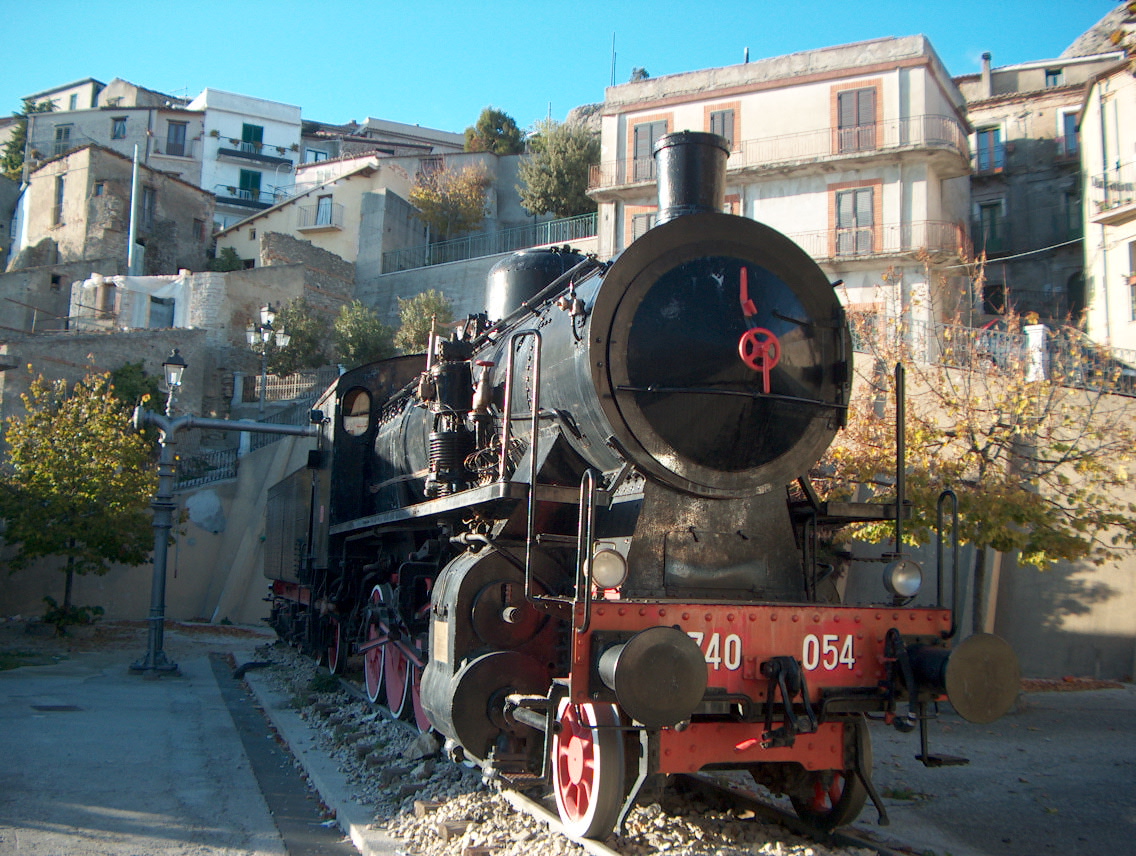
Ten, exceedingly breathless, minutes later, we arrive in the town. It’s heaving and, bizarrely, there is a steam engine parked in the centre. God only knows how it ever got up here – this mountain is far too steep to have ever had a railway – but it all adds to the quaint atmosphere of the place. We join the scrum for tickets. In true Italian fashion, there isn’t really a queue, and nobody knows quite what’s going on. No matter: we all join the fray, elbows working overtime, until Alby and Marco manage to get to the front. Once they get there and manage to talk to the ticket sellers, we find out that the entrance fee is a princely €3. This includes food and your very own commemorative wine glass. OK, so it’s engraved with last year’s date, but still. It’s a free wine glass, which you can refill as many times as you wish. This is going to be an excellent night.
Squeezing through the crowds, we make our way to the main piazza. There is a tarantella band in full swing, and food stalls aplenty. We grab our tickets and push our way to the front for panini filled with cheese and cured meat. Delicious. Liv, however, has more important things on her mind. Girls. We have empty glasses. Follow me! She launches herself into the crowd, scarf flying, and we all race after her. She’s heading for the south side of the square, where there is a barrel of wine fitted with a tap. Fluttering her eyelashes and grinning disarmingly, she manages to work her way to the front, queue-barging with glee. Pass your glasses, ladies! One by one, we pass them in, chain style, and she fills and passes them out, before squirming her way free and joining the rest of us.
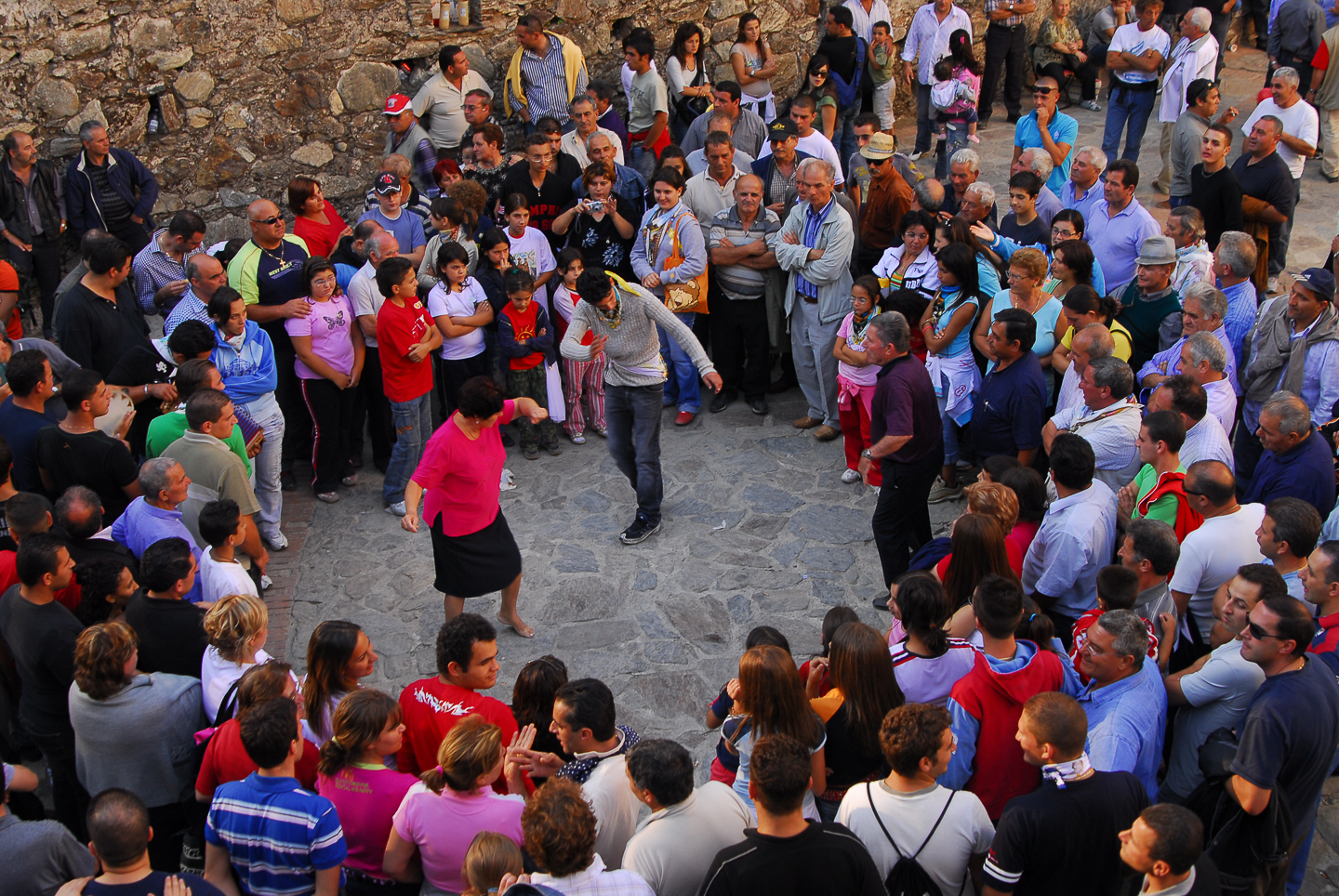
Salute! The wine continues to flow and the music continues to play. It’s impossible to resist the lure of the tarantella, and before long we are all dancing like pixies, coats unbuttoned, bags whirling, and empty glasses aloft over our heads.
No-one is too old (or too tipsy) to dance the tarantella
After a while, we notice that there is a group of old men whispering next to us. It seems there is going to be an approach. We carry on dancing. Finally, one of them, bolder than the rest, plucks up courage and strides forward. He has a bottle of wine, with which he tops us all up. He then draws Meg into a dance which, given that she’s been drinking all evening and is wearing heels in a cobbled square, is a very brave move. He’s a good dancer, though, and manages to avert disaster. They dance for a while, before he bows courteously to her and starts to chat. You’re all English? Meg starts to answer in the affirmative, but is interrupted by a discreet cough from her Calabrese boyfriend. Suddenly the old men’s mood changes. When we were merely stupid tourists it was fine for us to be drinking, and for them to encourage that by pouring more wine. However, now that we have Italian links, it is seen as utterly disgraceful. Women? Drinking? In public? Che brutta figura.
Diving away from the old men’s tutting and scolding, we wriggle our way through the crowd to the prime spot in front of the stage. No-one here is worried about appearances. Everyone is just there for the dancing and for the fun. When the band tries to stop playing, the crowd chants, ‘An-co-ra! An-co-ra!’ until they give in and play one final round, the music getting faster and faster and the dancers whirling ever more madly until finally no-one can carry on and we all double over, out of breath and helpless with laughter.
Don’t forget to read the other ladies of the Roundtable’s contributions. We love to receive your comments and feedback; do let us know what you thought of each post, either in the comments section below each one, or via Facebook and Twitter, using the hashtag #ItalyRoundtable
The eagle-eyed among you will have noticed that it’s been a bit quiet around here recently. There’s a reason for that – Davide and I got married on 20 August! It’s therefore been a busy few months, but hopefully with the weddings (oh yes, that’s the other thing – we decided to have three ceremonies – one to do the paperwork in Italy, one to celebrate with family and friends in Italy and finally one (still to come at the end of this month) to celebrate with family and friends in England) more or less out of the way I can concentrate on getting back to blog normality.
So, to get the ball rolling, we have a post for the Italy Blogging Roundtable. This month the topic is ‘wine’, which – given all the celebrations over the past month – was a logical one for me to ease my way back in with.
Cheers!
Yes, yes, we’re married – now let’s eat!
“Quindi … papà … mamma … sorella?” Alessia is making her way around the group, shaking hands as she goes. I correct her – Alice is a friend, not my sister – and then Davide leaps into the fray. “E poi … Alessia …” He holds up his left hand with the shiny new wedding ring on the fourth finger. “Marito!” Alessia’s mouth drops open and she flings her pen over her shoulder in a comic “Shut UP!” gesture. I hold up my left hand as well and she breaks into a huge grin before rushing forward to give me a kiss on both cheeks and then kissing Davide – and everyone else – in a flurry of overexcitement. “Congratulations! When did this happen? A few days ago? Ohmygod, don’t surprise me like that!”
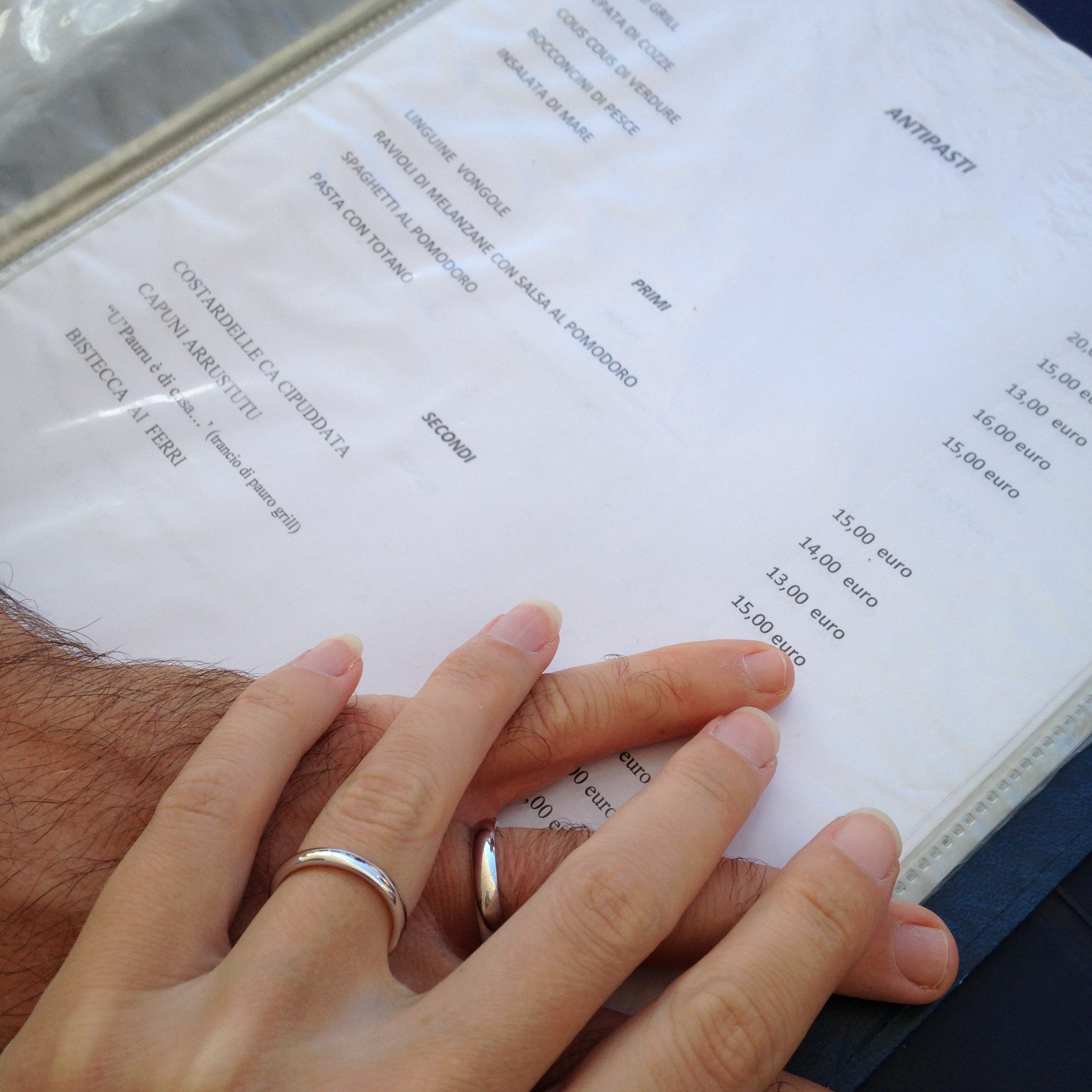
We’re at U Fucularu, our favourite trattoria in Catania. Alessia runs front of house, while her mum cooks and her dad flits between the kitchen and waiting tables. We turned up ten minutes ago to find all the tables full apart from one, and that was reserved. “But they’re late,” said Alessia’s dad, “so if they’re not here in ten minutes the table’s yours.” When we break the wedding news, everything changes. “The table’s yours! Subito! Hang on – we’ll just get clean glasses for you …”
Davide and I are sitting next to each other, but the conversational factions at the table have split into two: he’s mainly chatting to my parents, while I’m talking to Alice and Lexy, who arrived late and is struggling through a giant salad the size of her head. On seeing Lex’s tiny frame Alessia promptly names her ‘due ossi‘ (‘two bones’) which causes much laughter around the table, as we’ve recently decided that Davide’s nickname should be ‘Sicilian Dave’, and Alice’s work moniker is ‘Alice the Camera‘. We sound like we should be in a bad Guy Ritchie film.
I didn’t have the starter
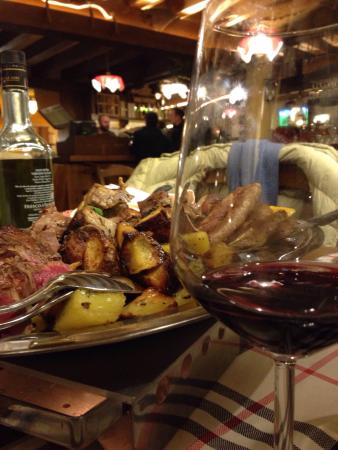
I’m making a half-hearted nod at eating light after the wedding feasting of the past few days, so am eating pasta with gorgonzola and pistacchio (ahem). Davide, Alice and my parents, meanwhile, are tucking into a giant platter of horsemeat. Whatever anyone’s eating, however, it’s accompanied by a red wine called (slightly ominously) o’scuru o’scuru. The name means ‘in the dark, in the dark’, which caused Alessia to make a crack about hoping that our marriage wouldn’t be like the wine. (Yeah, us too …) When I take a sip I realise why it’s so-named: it’s delicious, thick, and dark – and way too heavy for me in this heat. I leave the glass on the table while I concentrate on my pasta and helping Two-Bones-Lexy out with her salad. I’ll come back to the wine in the winter.
My dad, however, is an ex-rugby player. He also cycled the nearly 2000m climb from Catania up to Rifugio Sapienza on Etna a few days ago; he may be in his 60s, but he’s big, and he’s fit, and he can hold his drink accordingly. He’s therefore getting merrily stuck into the wine and topping Davide’s glass up liberally at the same time.
Davide, in contrast, is built on a much slighter runner’s frame and not used to drinking like an English rugby player.
The following morning, this all becomes very, very relevant.
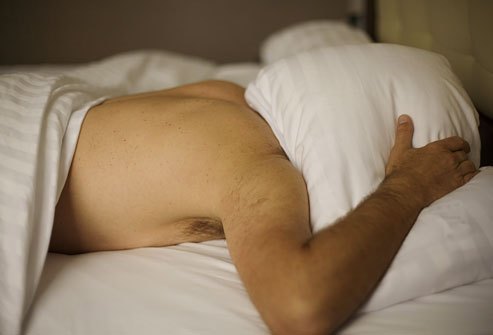
Davide wakes up when his alarm goes off. He’s supposed to be back at work today after having taken a long weekend off to get married and entertain my family, but it quickly becomes clear that it’s not going to happen and his four-day weekend is about to become a five-day one. With a groan he switches the alarm off, buries his head under the pillow and radiates misery. Ten minutes later he runs to the bathroom and returns looking pale. “I don’t think I’m going to go to work today, baby.” I look sympathetic. “Aww. Too much wine?” He shakes his head. “No, I think it’s a stomach bug.” I raise my eyebrows but don’t argue. Even though I’m sure it’s just overindulgence that’s causing him to feel dreadful, he does still feel dreadful, so I put a jug of water beside him and leave him to sleep it off while I pick up Lexy – who’s finally been felled by a celiac attack that’s been brewing for three or four days – and bring her back to the flat so I can keep an eye on her.
We’ve all been there …
Later that afternoon I have Lex asleep on my sofa, Davide asleep on the bed, and the flat is sparkling as I’ve had nothing else to do all day but clean while I wait for my two patients to start feeling better. I go in to check on Davide and he wakes up with a feeble moan. I try to persuade him that he needs sugar, fat and carbs, but he’s shocked to the core that I would even suggest it. “My stomach, amore!” There’s no telling him that I have learned through a decade of bitter, *bitter* experience in my London-living-actress 20s that it’s the best cure for a hangover; he’s still 100% convinced that what he has is nothing whatsoever to do with having drunk more than half a bottle of heavy red wine and eaten a kilo of roast horsemeat in 30 degree heat. I give up and fire my parting shot. “We’ll see in the morning …” He takes a weak sip of water, turns over and goes back to sleep.
It’s not until two or three days later, when Davide has long recovered, that we get to the bottom of why he was so convinced that it wasn’t a hangover. He’s musing on the strange ‘stomach bug’ that he had, and how the day after it he was not only craving, but able to eat pizza and chips. I laugh. “That’s because it wasn’t a bug, amore, but a hangover.” He shakes his head vehemently. “No! Not possible! I wasn’t drunk that night.” I give him a disbelieving look. He throws his arms wide in a gesture of innocence. “I wasn’t! Not like blaaaaaaarghurggghhhhwaaaaaah and falling over I wasn’t!” I have to laugh at his imitation of a pissed-up, English, Saturday night drinker, weaving about the place and spouting rubbish, but it’s in that moment that I realise: he’s under the impression that hangovers are reserved only for those who get so rat-arsed that they can neither stand up nor speak by the end of the night.
Four days married and it would appear that my husband has just experienced his first hangover, courtesy of summer dehydration, a meat platter, red wine and my dad.
I’m so sorry, amore – welcome to the family …
Now, without further ado, here’s the list of posts from the other Roundtable ladies this month. We love to receive your comments and feedback, so do let us know what you thought of each post, either in the comments section below each one, or via Facebook and Twitter.
A gentleman is never without his pipe. Or e-cigarette, as the case may be
Signor Crigio, who owns the men’s tailoring shop that used to be at the bottom of the building, is tiny, dapper and slim, with round glasses and a white, perfectly-trimmed moustache – the archetypal tailor. He’s recently closed the shop down, but when it was open he could usually be found outside it, sitting bolt upright on his moped, smoking an electronic cigarette and watching the world go by. One morning a year or so ago Davide and I were woken early by an insistent leaning on our buzzer: turns out it was Signor Crigio warning us that a delivery lorry was gouging and ripping wing mirrors off the cars parked on either side of our street right, left and centre as it tried to manoeuvre its way through the too-narrow space available. Davide’s jeep was in danger of being the next victim, and Signor Crigio had worked out (a) who it belonged to and (b) which doorbell to ring to find us. He’s the kind of neighbour you really need, in other words.
**********
“I said hello to you the other day, but you didn’t see me!” says the woman on the stall where I get my tomatoes, onions and lemons, with a big grin. I look up at her, wide-eyed. “Oh, I’m so sorry! Where were you?” She laughs. “Don’t worry! On Corso Italia.” I ask her for some red onions and she passes a paper bag over to me. “Here: I can’t reach – but you can!” We’ve never chatted before, but now that the conversation’s been started she’s bursting with questions, which could well have been brewing for months. “So how tall are you, exactly? A metre sixty-five, seventy?” I stuff onions into the bag as I answer. “Try one metre eighty!” Her eyes go wide and her mouth drops open. “No! Wow! Where are you from, anyway?” I tell her I’m English and she gives a sage nod. “Ah, of course; you’re all tall over there. Not like us midgets here!” I can’t help but laugh at her turn of phrase, and tell her that my dad and my brothers are all even taller than I am. Her face goes inquisitive. “So are your family all in England? What are you doing here?” I give her the potted history: arrived in southern Italy to teach; discovered I liked it; met a boy; getting married. She chuckles, a cheeky grin on her face. “So is your fidanzato tall, too?” I shake my head. “No – he’s actually a bit shorter than me.” The woman standing next to me chips in, “Yeah, my husband too – ballerinas all the way, right?” We glance down at each other’s feet and nod in humorous solidarity.
Heavier than you’d think
**********
The shopping bags weigh a ton. I’m sweating buckets as my fingers cramp and my arm muscles quiver from the strain of hauling everything back from market, but I’m on the home straight, so tough it out rather than put them down to rest yet again. Half a kilometre never seems so long as when you’re laden down with kilos of vegetables; and said vegetables never seem so heavy as when you’ve only got ten metres to go. I reach the front door to my building and put everything down as gently as I can, given my shrieking muscles, before rifling through my bag with shaking fingers in search of my keys.
The door to my building is 15-foot tall and made of solid metal: to open it from the outside requires putting your full weight against it and leaning hard. Today, as I do this, the bag of apples and kiwi fruit that I’ve wedged between the door and my feet so that they don’t roll all over the place starts to slump. I let out a tiny wail, visions of my fruit and veg ending up covered in god knows what from the pavement running through my mind’s eye, and make a grab for the bag.
Two things happen: (1) I fail to reach it and (2) I unbalance myself completely, knocking over another bag of different vegetables in the process. I could cry. I almost do, but as I scrabble about, trying to steady my ever-more-precarious pile of shopping bags, I hear a soft shout from behind me. “Signora! Let me help!”
I’ve had better days …
I look round and see Signor Crigio, who picks up my bags and hangs onto them while I haul myself upright. When I’m up to full height I’m a good foot taller than him; his eyes crinkle with amused concern as he looks up at me. I smile back at him and hold out my hands for the bags that he’s picked up for me. He tuts kindly. “But which floor do you live on, signora?” He says it fast, and not in standard Italian, so I don’t understand him at first. I have to ask him to repeat twice, which he does with good humour, slowing down each time. When I finally get what he’s asking, and why, I’m so embarrassed and touched by his thoughtfulness that I can hardly answer, and my words tumble out in a mess of English confusion. “Oh no, it’s fine, honestly, I only live on the first floor, it’s barely twenty steps, I can easily manage, don’t worry …” He takes my wittering with good grace and hands over my bags with a smile. “Well, if you’re sure …?” I nod, flushing to the very roots of my hair as I feel my eyes, ridiculously, starting to prickle with grateful tears. “Yes. But thank you. *Thank you*.” He nods and gives me a broad smile with just the hint of a wink. “I’ll close this door for you, shall I …?”
This post was written for the Italy Blogging Roundtable, a group of seven like-minded women – either based in Italy, in love with her, or both – all writing about a single monthly topic in their own, individual ways.
This month, our chosen topic was Community. We love to receive your comments and feedback, so do let us know what you thought of each post, either in the comments section below each one, or via Facebook and Twitter.
Now, without further ado, here’s the list of posts for this month. Read and enjoy …
The guys selling the chicken, pork and beef from the stalls outside the butcher’s shop know me now. After eighteen months of me shopping there, they can guess what I’m after before I’ve even asked for it. The chicken guy is the friendliest (if still reserved), and will always give me a smile, as well as a bit of chat, but the little old guy who sells the pork also nods when he sees me coming. “Pork chops, signora? Nice thick ones?” Conversation doesn’t run to much with him, as he seems only to speak dialect and we don’t understand each other’s words, but a smile and some sign language go a long way.
The women inside, on the other hand, make being sullen an art form. There are always the same two behind the counter, weighing the meat and taking the money: mother and daughter, from the look of them. Then there’s a third, whose eyes give her away as another daughter, and who deals with the meat grinder and packing up cuts of meat when the men have their hands full. The daughters’ faces will relax just a fraction nowadays when the strange foreign woman comes in to pay, but the mother is always like stone. I don’t take it personally: she’s the same with everyone.
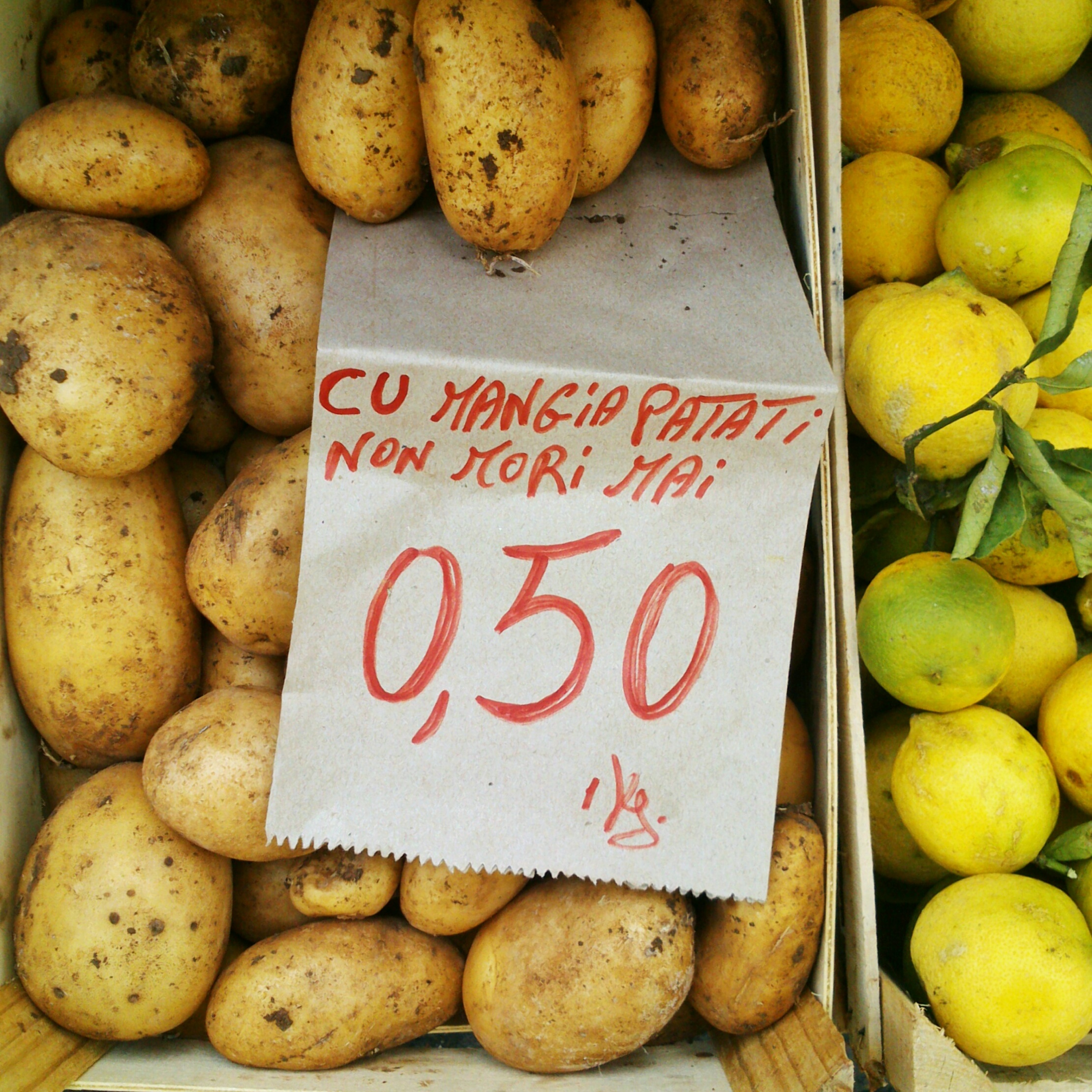
Sicilian greengrocer say, ‘he who eat potatoes never die’
There’s rain threatening today, as there has been all morning, but the shopping can’t be put off any longer if we want to eat tonight. The dumpy woman at the potato stall shivers while she weighs them out, and the clatter of my coins as I drop them into the plastic scoop that she uses to extend the reach of her arm over the stall seems overly loud in the absence of the usual market day chatter. It’s a slow day for the traders today; most right-thinking Catanese are closeted at home for fear of getting wet.
At the cheese stall a few weeks ago, when they asked where I was from and discovered that I was English, I was drawn into a conversation about the price of cigarettes in London. “They’re really dear, aren’t they?” Today, it’s business talk only. Everyone – not least me – is keen to finish up for the day and go home to get warm.
As I scrabble in my purse for change, the rain that’s been looming all morning begins, pooling on the tarpaulin above and dripping off the edges. With my head bent forward as it is, it won’t be long before one of those drips goes down my neck, but I don’t have a spare hand to pull my hood up. I squeeze closer to the front of the stall. The cheese guy gives an abrupt shake of his head. “Signora!” I look up and he beckons me round to his side, out of the rain. He holds out his hands for my tangle of shopping bags. “Here. Give me those.” I hand them over with a grateful smile, put up my hood, and find him the correct change.
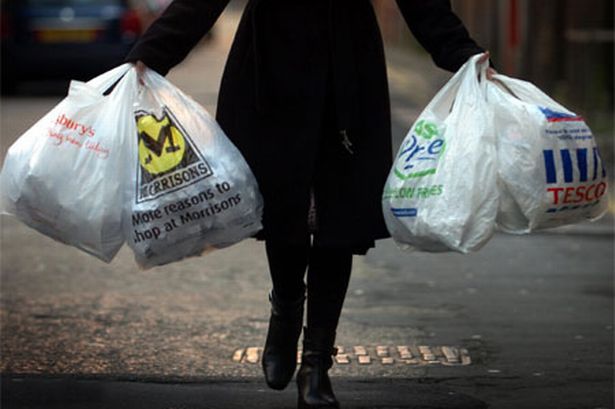
Carrying the weight of the world – or so it sometimes seems
Transaction completed, the cheese guy gives me a grave nod of acknowledgment and looks at the bags in his hands. I make as if to take them back from him, but he frowns and gestures towards the cotton shoppers with which I always come armed. In today’s hurry to get home before the rain started, I haven’t managed to stuff my accumulated plastic bags of produce into them, and they are still slung, empty, over my shoulder. “In there? I’ll help.” He holds the cotton bags open as I stuff the various plastic ones inside, stammering flustered thanks as I do so.
I’m about to cram in the final bag when he grabs it back out of my hands. “Wait!” In my English haste to stop bothering the poor man, I hadn’t taken note of what was in each bag as I shoved it into the shoppers. He extracts a bag of delicate mushrooms out of the shopper and hands them over to me with a satisfied nod at averting disaster. “Carry those apart, yes?” I nod in meek agreement. Bags packed to his satisfaction, he hands them back to me with the hint of a smile and a gruff, “Good day, Signora.”
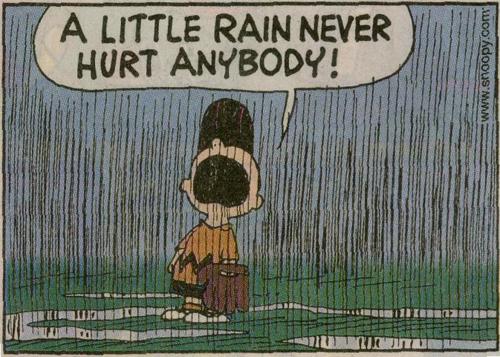
Maybe not, Charlie Brown, but try telling a Sicilian that
I stride on to the butcher’s shop, where I’m greeted with the usual transactional questions from the men, and dead-eyed cold indifference from the women. While I pay, it starts to pour in earnest. I walk to the doorway, arms full of groceries, and look outside in dismay at the torrents of rain sheeting down. I’m well-sheltered by the tarpaulin over the top of the meat stalls out front, but the pork guy mistakes my expression for one of determination and holds up his hands with a ‘stop right there’ gesture. I don’t catch what he says but his meaning is clear from his hectoring, fatherly tone: ‘there’s absolutely no way I’m letting you leave this shop in this weather, young lady!’ The chicken guy laughs at me. “No umbrella?” I shrug and shake my head, laughing along with him. He points his knife at me, still killing himself with laughter. “You’re stuck here until 2, then, according to the forecast!” I open my eyes wide and groan in mock-horror, then set down my bags and lean against the doorframe to wait out the worst of it.
The meat-grinding daughter comes to stand next to me. “Can you smell oranges?” I don’t realise at first that she’s talking to me, and am so taken aback when I do that I almost forget to answer. “Er – yes! Yes, I can.” She nods across at the kiosk opposite. “Must be from over there, I reckon. Strange how the rain brings it out, though, no?” She grins companionably, and I do the same.
We stare out at the rain, which is still absolutely belting it down. The street outside has turned into a river and the few people still on the streets when it started are huddled in doorways like miserable stray cats, umbrellas up against any stray overflows from above. Chicken guy turns to meat-grinding daughter and says something in dialect too rapid for me to catch. She says something back and disappears. He gives me, still standing in the doorway of the shop, a look of amused concern. “Do you live far from here?” I shake my head. “No, just a couple of streets away.” Meat-grinding daughter returns, brandishing an umbrella with a grin as wide as her face. “You want this …?” Chicken guy nods earnestly at me and I now understand what it was that he’d said to her before: ‘get the girl an umbrella lest she drown’ – or words to that effect.
It seems that I might be – despite previous evidence to the contrary – an authenticated local. And that means that – despite the rain – right now I couldn’t be happier.
This month, as well as the usual Italy Roundtable posts, you have some special bonus ones, as we ladies of the Roundtable have teamed up with the COSÌ bloggers to talk about our ideas on authenticity.
Well, all right, not fight about. But they definitely baffle us. Welcome to the heady world of the cross-cultural relationship.
Item one: food
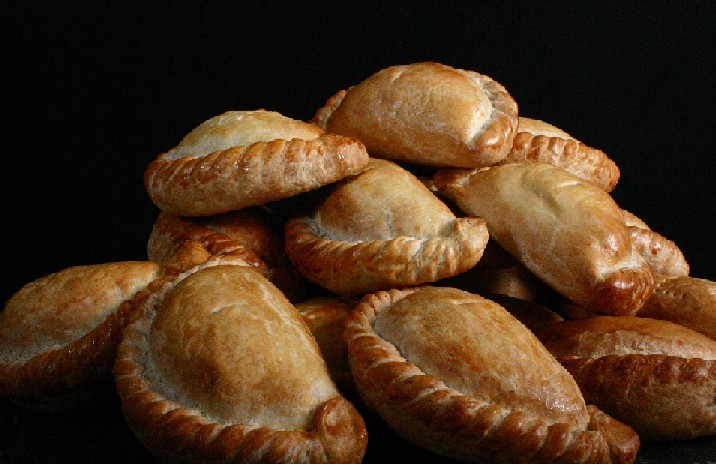
Cornish pasties FTW!
He’s Italian; I’m English. You may be chuckling right now, thinking that you’ve already guessed what the problem is. You’d be wrong. This Englishwoman can cook. And that Italian man is a staunch convert to the delights of Cornish pasties and sticky toffee pudding. (Maybe not so much Marmite, but a good 50% of Brits don’t like it either, so we’ll let that one go.) No, it’s not that English food is disgusting and Italian food is sent from heaven, as many would have you believe, but just that we have very different expectations of what constitutes a square meal.
A potted history of my eating habits: My mum’s early education in food was from my German-Jewish by birth, Surrey-raised grandmother. Mum then went on to train at a Cordon Bleu school and to work as an in-house caterer for a posh City investment bank. My dad, meanwhile, spent his early years in Malaya, before returning to English boarding school life. My culinary education has therefore been wide-ranging. I learnt to love strong tastes like pumpernickel, kümmel and curry from a very early age. Pizza and pasta appeared rarely on the table; meat and two veg (heavy on the veg side of things) was the more usual order of the day. If I drank a hot drink, it would be tea, and it would be scalding hot; the same goes for food. I’m not as fanatical as my mother, who heats all her plates, but I still prefer my hot food to be hot, rather than lukewarm.
Davide’s idea of torture when we first met
Compare this with Davide’s childhood foods, which were Sicilian, and nothing but. Until he met me he’d eaten (sub-standard) Mexican a handful of times, and had never tried Indian, Thai, Chinese or Japanese food. Mild spices had him gasping for air and glugging down litres of water. His dream meal was (actually, still is …) Catanese scacciata: broccoli, tuma cheese and black olives cooked down until soft and chunky, and sandwiched in between two thick layers of pizza dough before being sliced into 8-inch squares. Coffee is his hot drink of choice, but he has to let it sit for ten minutes before he can drink it. Hot foods get cut up into bitesized chunks and spread out around the plate to cool before being blown on vigorously, just to make extra sure. In fact, on more than one occasion when I’ve served lasagne or moussaka, which retain nuclear levels of heat for unfeasibly long lengths of time, I’ve finished eating before he’s even started.
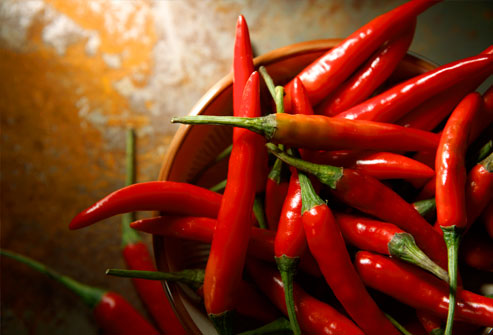
In the past two years, we’ve come to compromises over many things: he’s more of a chili fanatic than I am nowadays, chucking peperoncino flakes over everything and requesting Tex-Mex over every other type of cuisine, and I can’t function without coffee every morning. I don’t think we’re ever going to be able to agree on the other’s unconditional love for tea or scacciata, though.
Item two: cultural references
What do you mean, you don’t get the cultural reference?!
Bonnie Tyler’s ‘Holding Out for a Hero’ is playing on the radio. Davide turns it up. “Do you know this song, amore?” I snort ironically. “Do I know this song? Of COURSE I know this song!” He looks at me oddly. “Why ‘of course’?” I remind myself for the millionth time that we grew up in (a) different countries and (b) different decades.
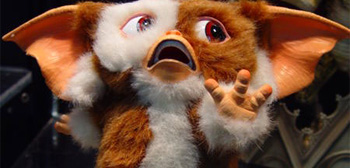
Davide turns on the overhead light in the bedroom. I dive under the covers, squeaking, “Brigh’light! Brigh’light!” I know he’s seen Gremlins and loves it, so am confused when he doesn’t get the reference. All becomes clear when I remember that I’ve forgotten the vital fact that foreign language films are universally dubbed into Italian here.
Item three: layers and language
Language is an obvious hurdle in a cross-cultural relationship. It has more levels to it than just words, though. Vocabulary is the very tip of the iceberg. Factor in things such as local dialects and phrasing along with differing cultural norms and there are myriad opportunities for misunderstanding.
Welcome to my world …
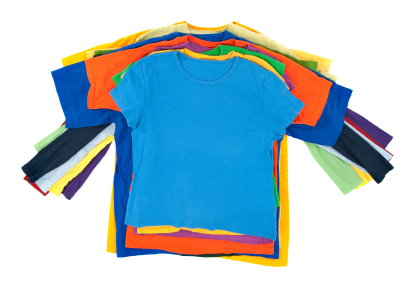
I grew up in a cold house which was expensive to heat. Entreaties to my dad to put the heating on would be met with a quick retort to “put another jumper on”. Layering, to me, is a way of life. Davide, on the other hand, works on a ‘what you see is what you get’ basis. In the summer, he wears shirts or printed t-shirts; in the winter, jumpers over plain, short-sleeved t-shirts which he regards as vests. If we go to a crowded restaurant in winter, he swelters, unwilling to remove his jumper and expose either his arms or his ‘underwear’.
A while ago, Davide needed a new jacket for hiking in the mountains, so off we headed to Decathlon. He was on a limited budget, and I suggested buying something lightweight and waterproof which he could layer over the top of a fleece or hoodie. He, however, was set on buying an (admittedly gert lush) insulated jacket. My reasoning that the lightweight one would see more use in a country that only has three months of cold weather fell on deaf ears: the insulated jacket was bought.
Anyone could make the same mistake
The following weekend, out walking in the mizzle, Davide starts bemoaning the fact that his new jacket is too hot. Exasperated, I tell him that I’d told him so: “All you really needed was a lightweight one!” Now, I admit that I’m being snippy, but I’m unprepared for him to give as good as he gets and retort, “Actually, I need both.”
I’m gobsmacked. Have I heard correctly? Did he actually just use ‘actually’ at me? How dare he?! Furious, I step up my pace and march along the path, radiating spikes of pissed-off Englishness into the muggy air.
Five minutes pass, the silence broken only by stomping footfalls and pinched, huffy breathing, before Davide speaks again. “Have I said something wrong?” Turns out that he has no idea of the effect of using ‘actually’ against an English person who’s convinced they’re in the right in an argument.
I feel somewhat silly.
This post is my contribution to February’s Italy Roundtable, and this month, I’m excited to announce that we have a new member to welcome to the Table: Michelle Fabio of Bleeding Espresso. Don’t forget to check out her – and all the other ladies’ – thoughts on this month’s subject: Lost in Translation.
8:30 in the morning and the ashtray’s already full
“Good morning. I’m English, but I’d like to get Italian residency.” The man in the filthy, nicotine-stained office with the overflowing ashtray on his desk barely gives me a glance. “You’re in the wrong department. Round the corner, number 28, first floor.”
Well, that was a good start.
Davide and I navigate our way up the rickety stairs at number 28, which are covered in plaster dust, and have trailing cables hanging loose from the walls. It hardly seems possible that we’re going to the right place, but then I spot a battered A4 printout on the wall with a crudely-drawn arrow pointing us to the office for foreign registrations. We carry on.
Upstairs, there’s a row of chairs fixed to the wall. I scoot to the only available one and sit myself down. There are two doors – one at the end of the corridor, and one to the left of the chairs. They’re both firmly locked. I peer along the line of people, all clutching various official-looking bits of paper, as I try to work out everyone’s stories. A good few people – including me – look like they’re here with Sicilian spouses, but there’s also a Chinese couple and a Sri Lankan family, as well as some people on their own.
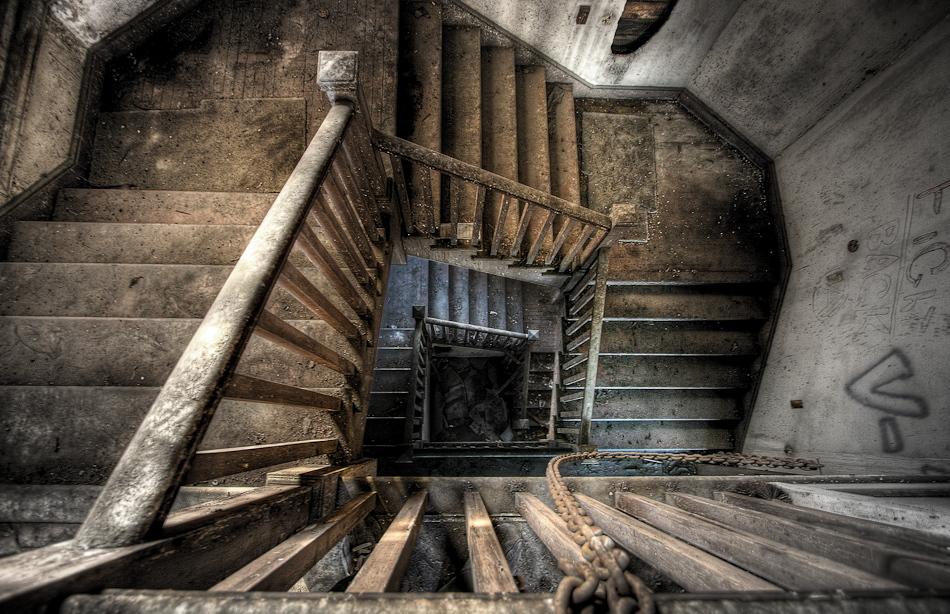
This staircase might be in better condition than the one at the anagrafe
The office is supposed to open at 9:00. At 9:10, the camp man who’s been flitting in and out of the door since 8:45 opens it and lets the Sri Lankan family in. Or part of it, anyway. The family consists of middle-aged Mum and Dad, and their young adult son. It seems like the son already has his documentation sorted, but that the parents’ Italian is a bit lacking, so he’s here as translator. They’ll only let two out of the three of them in at one time, though, so there’s some shuffling about of different family members while they deal with all the permutations.
The rest of us are left waiting in the freezing cold corridor, staring at an out-of-order photocopier. A large group of Senegalese men arrives. “Who’s last in the queue?” There’s a fair bit of confusion over this , so the head Senegalese guy – wearing darkest of dark glasses and whitest of white linen shirts, sleeves rolled up to the elbows despite the January cold – takes charge. “Let’s make a list. Everyone write your names down in the order you arrived.”
Camp guy emerges out of the door again. The Chinese couple who are at the top of the list dart forward – but camp guy holds up a hand. “Changing residency within Catania ONLY.” The Chinese couple slumps, defeated, as a round, partridge-like Sicilian man and his wife – who looks Italian but can’t be – get to jump the queue. Five minutes later he comes charging out of the door, identity card in hand and a harried look on his face. Davide nods in comprehension: “My guess is he needs a photocopy.” I look at the pile of papers in my hand. Stupidly, I hadn’t thought about photocopies – and I bet I’m going to need at least one, if not more, of every document I’m holding: work contract, passport and Codice Fiscale (tax code). It didn’t mention this on the website – but then again, when I emailed this office for confirmation of the documents needed, I received a reply consisting solely of their opening hours. It doesn’t bode well.
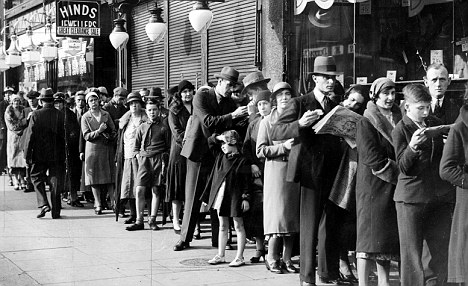
Creating order out of chaos
Camp guy opens the door again. “Catania to Catania ONLY.” We first registrants subside, muttering, as people who arrived after us get to jump ahead. The next time this happens, Davide and a few others push forward and stand in the doorway, demanding answers. Camp man shrugs: “What can I say? Primo iscrizione takes a long time …” Davide returns, chuntering. “There are four people sitting in there – and two of them are just twiddling their thumbs and doing nothing.” A rebellion starts to brew in the corridor. Somebody bangs on the door. Camp man opens it a crack. “All right; FINE – primo iscrizione. Who’s next?”
Davide and I enter. “Good morning. I’m English, but I’d like to get Italian residency.” The woman behind the desk asks for my work contract. I give it to her and she flicks a look at the headed paper it’s printed on. “So this is a letter of confirmation from your employers, yes? We need your CONTRACT, dear. Oh, and proof that you have workplace insurance.” She pushes it back over the desk towards me. It takes a second for what she’s said to sink in. I start to splutter. “What? No, this IS my contract. Here – look.” I jab my finger at the part that says, at the top, ‘Contratto di Lavoro’. “And here – here’s the part that tells you about the insurance.” She nods, supremely uninterested. “Yes, yes; well, you still need the insurance certificate. Your employers will have it, for sure. We’ll need to see the original, obviously, as well as a photocopy.”
A phone call comes in to her desk. She calls over to camp man. “Michele! Can you answer the phones? And if they’ve got any questions, just tell them to come down here and we’ll let them know what they need when they get here.”
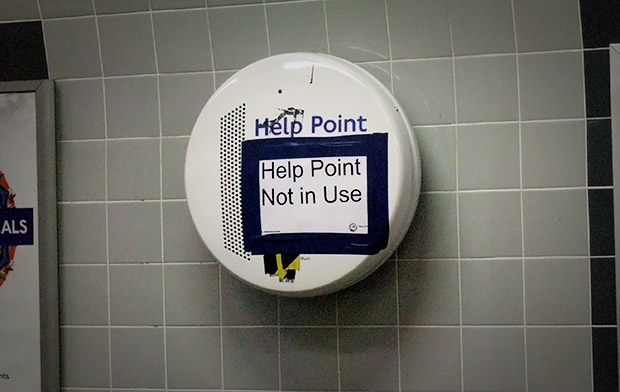
Not-so-helpful help point
While I fume, lost for words at the inefficiency and miscommunication, Davide grabs a pen and a piece of paper. “Signora. Please tell us *exactly* what documents we need to bring with us.” She reels off a list of dizzying length, then passes over a number of forms to fill out. “There. Come back when you’ve got everything.” She turns back to her computer screen. We are dismissed.
A few days later I’m back in the freezing cold corridor again. Davide is still downstairs hunting for an at least semi-legal parking space. Despite having arrived half an hour before the office opens, there’s somebody already in the queue – a tall, young, black guy. I smile at him and he nods back with a wry grin. “You can go ahead of me if you want – I’m waiting for my lawyer.” I thank him, and tell him that I’m waiting for someone, too, but if his lawyer still hasn’t arrived when the office opens then I’ll skip ahead. There’s a moment of that awkward silence you get after having started a conversation with a stranger who you then have to sit next to for an unspecified amount of time. He breaks it by asking me where I’m from. I tell him. His face lights up. “Oh, I so want to go the UK! And to America. One day, I hope …” He tails off. The fact that he’s at this office waiting for a lawyer indicates that it’s probably going to be a long road for him to get the necessary permissions to travel through Europe and the States. I give him what I hope is a sympathetic smile and ask where he’s from. Senegal, apparently.
We lapse back into silence.
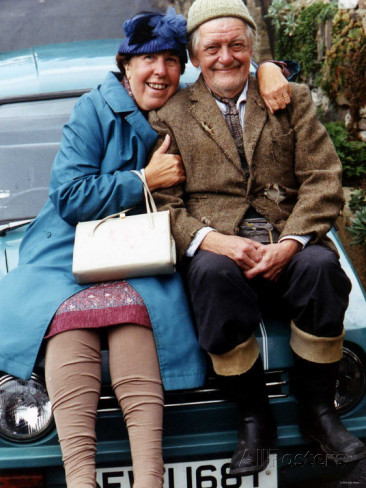
Nora, Compo and Nora’s tights
A tiny, elderly Indian woman stomps cheerily along the corridor, keeping up a mumbling commentary to herself as she goes. She’s your stereotypical crazy lady, dressed in a faded, navy blue padded coat, buttoned to the chin. The coat falls to knee level, below which is a pair of skinny bow legs encased in wrinkled, Nora Batty-esque tights, and bottomed off with carpet slippers. She heads for the door of the office, grinning blithely at us. “Is there anyone in there?” We tell her that there is, but that the office isn’t open yet. She chuckles. “Oh, well. I’ll just give them a knock anyway …” Davide – who’s arrived just in time to see the show – shoots me an amused glance. Crazy lady bangs smartly on the door. As expected, the jobsworths inside ignore it. She bangs again – and again. Camp guy opens the door a crack. “We’re not open yet.” Crazy lady isn’t in the least deterred. “But you’re all here! Why don’t I just come in …?” She takes a step closer, beaming and nodding as she does so. Camp guy steps back, taken by surprise at her insistence. She twinkles at him. “Ooh, g’wan. Let me in!” There’s a voice from inside – somebody has recognised her. “Signora!” A woman appears at the door and puts an arm around her shoulders. “How lovely to see you – why don’t you come on in for a chat?”
At 9:00 a large, grey tabby cat appears in the corridor, weaving its way through the legs of the back-office staff who are only now arriving, coffees in hand. She seems to know her way about, and heads directly for the door to the back office. One of the workers laughs. “She’s here to see her owner! Who does she belong to?” There’s general hubbub from inside the office as everyone denies responsibility. The cat pokes her nose through the open door but is shooed away. She trots back the way she came.
Crazy Lady reappears out of the office, just in time to spot the cat. She cackles with joy. “Hello, kitty!” The woman from the office pats her on the shoulder, her face tolerant but kind. It seems unlikely that Crazy Lady had any real business in the office today, but she’s content to have had a chat. Maybe the workers here aren’t so bad after all.
Yippee!
9:10, and camp guy finally opens the office door for business. “Who’s first?” Senegalese guy’s lawyer still hasn’t arrived, so he gives Davide and me a rueful shrug and waves us ahead. When we get inside, the woman from last time is there. She gives a giggle and points us over to another desk. “Hello again. Don’t worry – you can go to Rita today. She’ll sort you out.” We take a seat at the indicated desk and pull out the folder full of paper that we’ve brought with us. “Good morning,” I say. “I’m English, but I’d like to get Italian residency …”
Postscript: Second time around, all went well, and I’m now (pending a visit from the Vigili to confirm that I live where I say I do) registered as an Italian resident. Calloo, callay! If you’re thinking of going through the same process, I recommend getting in touch with your local anagrafe and finding out what documents you need. In my case, this was:
1. passport (original plus photocopy) 2. codice fiscale (original plus photocopy) 3. work contract (original plus photocopy) 4. workplace insurance certificate (original plus photocopy) 5. photocopy of landlord’s identity card 6. photocopy of landlord’s flat deeds 7. completed, signed form from landlord stating that I’m staying in his flat 8. completed, signed form of my personal details 9. €16 tax stamp. Phew.
Post-postscript: This post was written as part of the Italy Roundtable’s (newly resurrected! Yay!) monthly blog posts. This month’s theme was Changes; do check out what the other ladies have written, and leave us some comments to let us know what you think, either on our blogs or on our Facebook page.
This interview took place on camera and in Italian. Luckily for you, I’m a bit more coherent in written English …
Months and months and *months* ago, I received an email from Rochelle of Unwilling Expat, asking if I’d be interested in doing an interview for her blog. I shot her a quick email back, saying yes, why not? – and promptly forgot all about it.
Forward a month or so, and Rochelle sends me an email apologising for the delay, and including the questions she’d like to ask if I’m still up for it. I file it away for later – and promptly forget about it again.
Clearing out my inbox a month or so on again, I find said forgotten email. Swearing lightly under my breath, I copy and paste the questions into a text file and – (are you spotting a theme yet?) – forget about them for a third time.
A couple of weeks later, I finally get round to completing the interview. I check it through for errors, mail it back to Rochelle and (you know what’s coming, yes?) wipe all memory of it from my mind.
So it was a lovely surprise when, at the beginning of this week, Rochelle emailed me to wish me a Happy Christmas and to let me know that the interview was going to go up on the 19th (i.e. today). And it was an even lovelier surprise to read what I’d written. At this point in December, when it’s cold and rainy and my brain is exhausted from coming up with exciting ideas for lessons over the last three months of term, it’s good to be reminded of the things that I love about living here in Catania.
Go on: have a read. I think you’ll see what I mean.
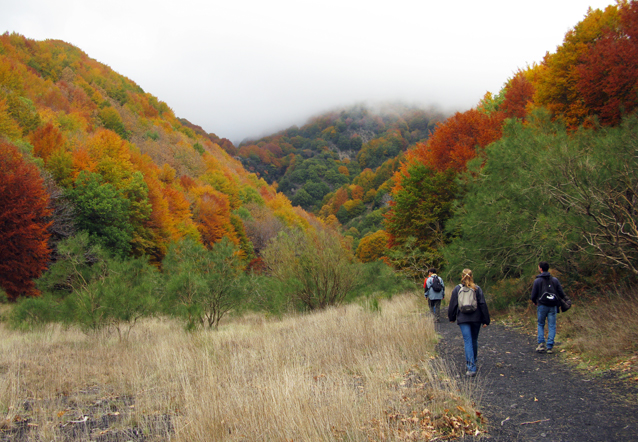
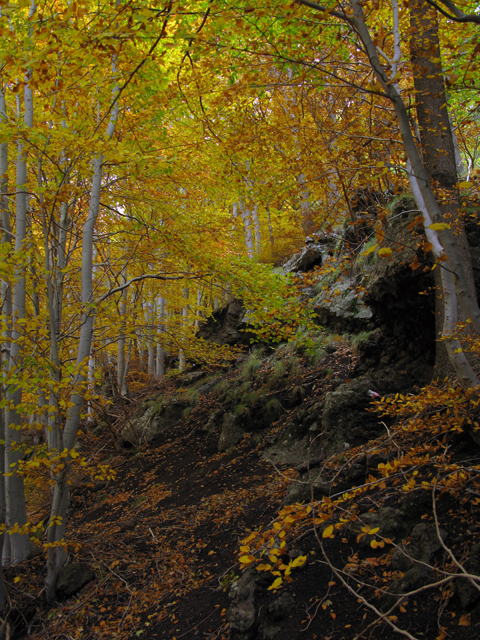
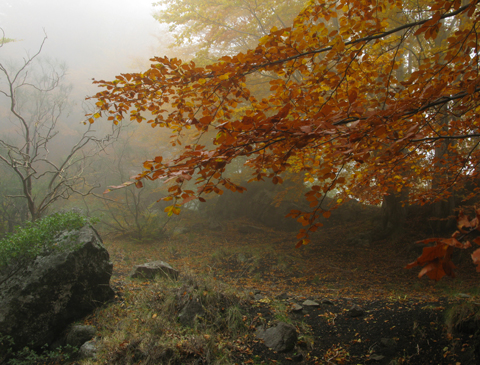
Etna’s trees, dressed in their best and showing off their full range of autumn coloursInto the woods …
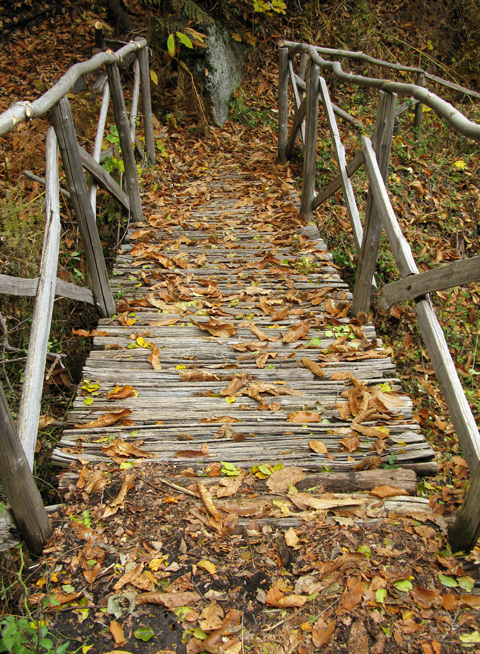
… and over the bridge, trippety-trap
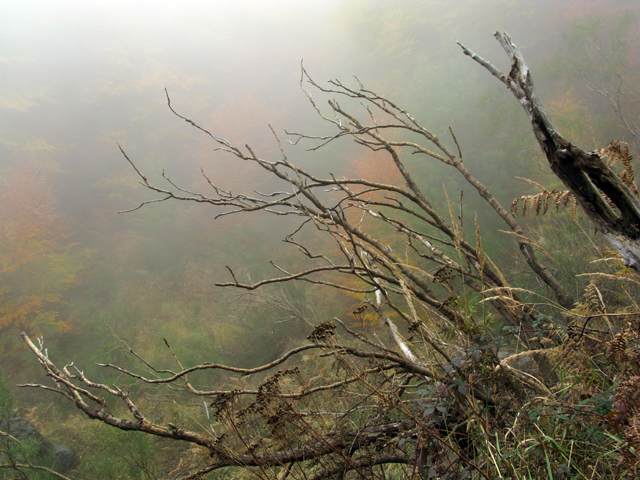
A glow of sun from far above, and the damp, smoky scent of cloud all around
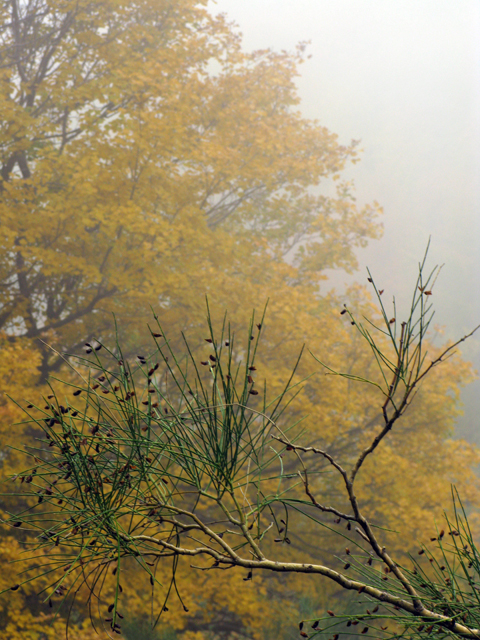
A crisp-edged broom breaks through its muffling layer of cloud
With the cloud is at its thickest, and the slope at its steepest, we scramble through undergrowth and skid on crunchy, loose-lying, black ash on our final push to the top
… where the clouds – at just the right moment – clear.
Etna, you never fail to amaze.
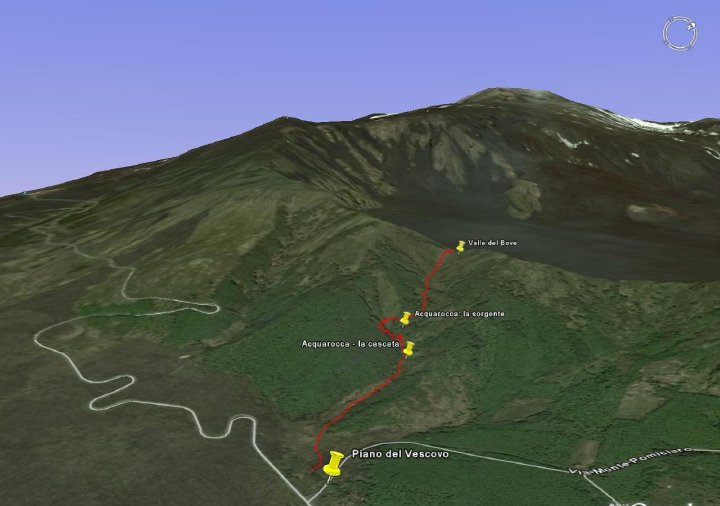
our route
You can also find a description of the route, and directions on how to follow it here
This website uses cookies to improve your experience while you navigate through the website. Out of these, the cookies that are categorized as necessary are stored on your browser as they are essential for the working of basic functionalities of the website. We also use third-party cookies that help us analyze and understand how you use this website. These cookies will be stored in your browser only with your consent. You also have the option to opt-out of these cookies. But opting out of some of these cookies may affect your browsing experience.
Necessary cookies are absolutely essential for the website to function properly. This category only includes cookies that ensures basic functionalities and security features of the website. These cookies do not store any personal information.
Any cookies that may not be particularly necessary for the website to function and is used specifically to collect user personal data via analytics, ads, other embedded contents are termed as non-necessary cookies. It is mandatory to procure user consent prior to running these cookies on your website.